
How does a perimeter examination work?
A perimeter examination is quick and painless and, besides vision problems, it can also reveal non-ocular diseases. It is not a routine part of preventive eye check-ups, but it should not be left out of comprehensive examinations.
What is a perimeter?
Very simply, a perimeter can be defined as a device for measuring the extent of the visual field and gaps in it. A patient may notice changes in their peripheral vision, but may not attach much importance to them. They do not suspect that deterioration of peripheral vision may be related to another, more serious disease. Thanks to the perimeter, it is possible to determine the exact location of the visual field damage and set the treatment according to the diagnosis.
A perimeter can reveal several diseases
Besides determining the extent of the visual field, perimeter examination is also used:
- when glaucoma, macular disease or retinal damage is suspected
- to examine the function of the optic nerve
- to check the function of the visual cortex
- to verify the function of the visual pathway, which transmits the visual perception from the retina to the brain
- to monitor the progress of treatment of glaucoma
How a perimetric examination works
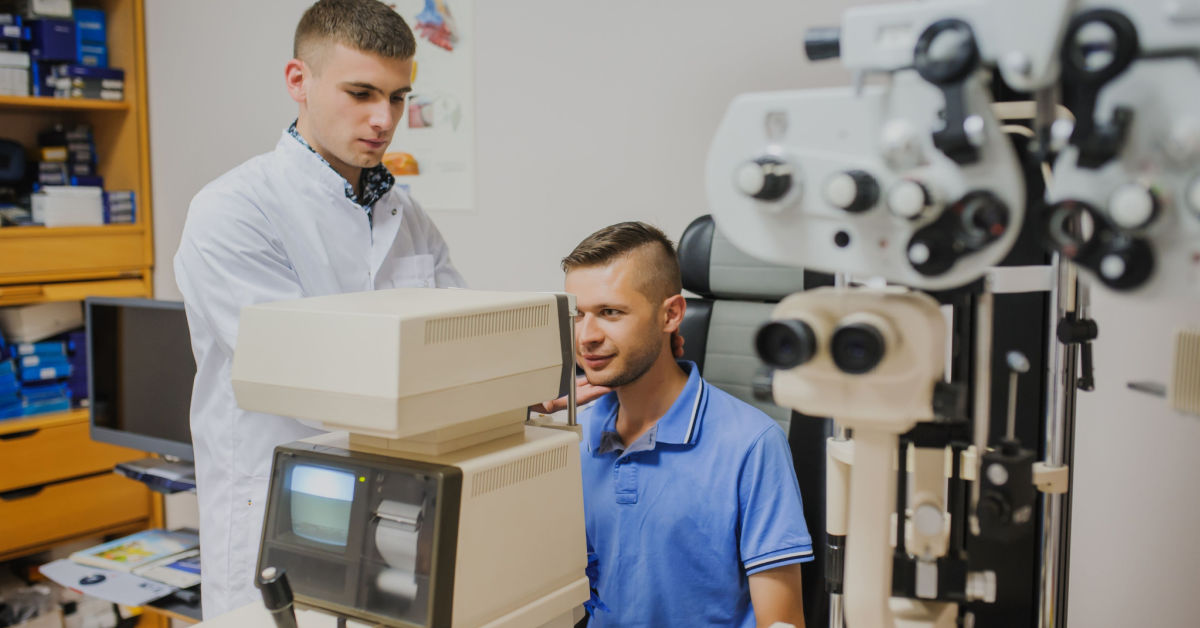
At our clinic we use the most modern instruments and devices, and the perimeter is no exception. MUDr. Ivo Ďurkovič, MPH says: „It is a state-of-the-art computer-controlled device that records the eyes' reactions to visual stimuli.“ The patient sits in front of the perimeter with their head and chin resting on supports. They look at one point in the centre and hold a button in their hand. The computer sends visual stimuli in the form of various small lights. When the patient sees them, they press the button. If the eye cannot see them, the computer repeats the attempt with brighter and larger lights.
Maximum cooperation from the patient is needed during the examination. The patient must concentrate fully, look at only one point and not move their eyes. Otherwise the results of the examination could be distorted.
The perimeter examination is completely painless and takes only a few minutes. The result is a chart showing the extent of the visual field separately for each eye.